Product description
Published by the National Technical Museum Prague
250,00 CZK
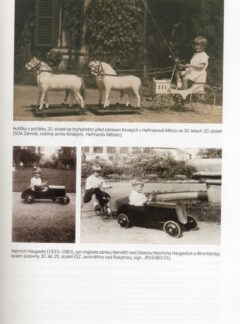
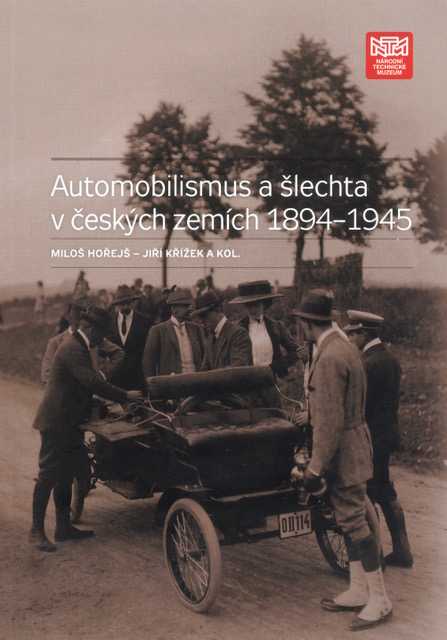
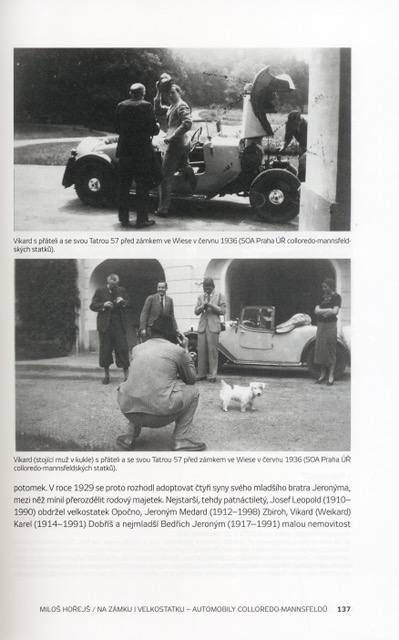
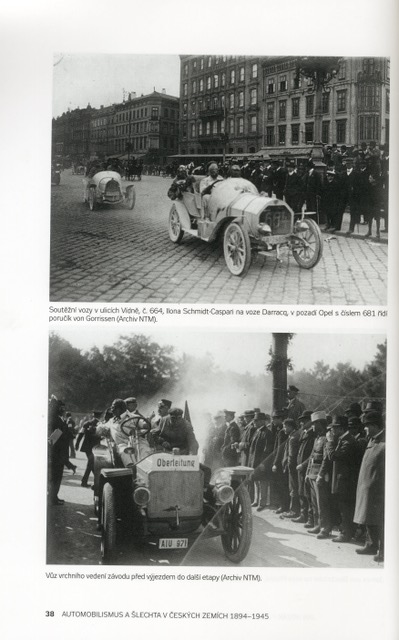
The connection between the nobility and the automobile is surprising and unexpected for many people. The nobility is perceived as a conservative community, living in its own world of conservative rituals and completely closed, not only to new advances in science and technology. This myth is only slowly being dispelled and the nobility is being imagined as an independent factor in both the economic sphere and the field of science and technology.
Only 2 left in stock
| Weight | 0,925 kg |
|---|

Published by NTM Prague
Softcover, format 17 x 20.5 cm, 127 pages
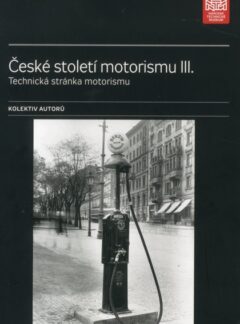
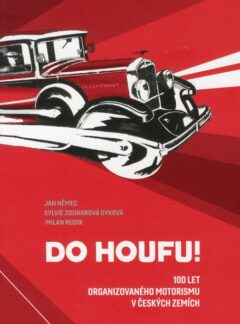
The publication is a list of contributions presented at the workshop Czech Century of Motoring III – Technical Side of Motoring held in the cinema hall of the National Technical Museum on September 13, 2021. Other studies were also published that were created as part of the NAKI II project Czech Century of Motoring, which is being implemented in 2018–2022 by the Faculty of Humanities of Charles University (Part I), the Technical Museum in Brno (Part II) and the National Technical Museum (Part III).

Published by the Technical Museum in Brno
Softcover, format 16.5 × 24 cm, 190 pages
On February 7, 2020, the book launch of the head of the State District Archive in Děčín, Jan Němec, Motorists on and under Šébr took place at the Technical Museum in Brno.
Pre-war Czechoslovakia had long underestimated the potential of motoring and left car and motorcycle owners to help themselves. In our over-motorized present, drivers would be surprised to find themselves having to procure road signs, pay for winter maintenance and constantly ask for improvements to roads that cost nothing. In order to be heard, drivers formed associations, of which there were around a hundred, which fought each other for members. The German car club "Nordböhmischer Kraftfahrerbund" in Rumburk managed to unite almost 2,000 motorists and its voice carried weight. It was one of the few to cooperate closely with the Car Club of the Czechoslovak Republic and for a long time put the interests of drivers above national and political interests. It organised popular races, published a magazine, gave lectures and fought tirelessly for domestic driving.
This is yet another masterpiece by an author known for his book, The Legendary Motorcycle of the Czech Republic. We recommend that anyone who is eager to buy the book, they will not regret it.


Another part of the extensive work of the author and historian. Already on the page with the contents, the reader will find out that in a sector of only seven letters in alphabetical order, there were 72 motorcycle brands operating in our republic. Small locksmith workshops that produced a single motorcycle or applied a drive unit to a bicycle frame are also captured. Rarely preserved materials have been enriched here with high-quality processing, from graphic preparation to the selection of materials used. The publication will once again significantly advance detailed knowledge of the history of motorcycle production. Libor Marčík's representative publications are always a suitable gift for all motorists, regardless of age or focus.

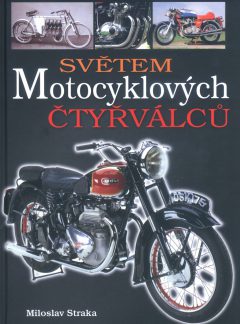
The author has compiled the history of the development and production of four-cylinder engines for motorcycles from the first preserved types. After a three-page introduction to the subject, there is the first of the structurally interesting motorcycles with a four-cylinder engine, where we also have a proud world first: the Laurin & Klement with an in-line four-cylinder engine made in Austria-Hungary. From a chronological perspective, various design directions are interesting, often avant-garde, but also some less fortunate ones, which were often limited by the possibilities of workshop processing. The theoretical idea of the designer was timeless, but the appropriate technology had not yet been produced. Detailed technical descriptions of another twenty-five structurally interesting motorcycles of often no longer existing production brands will certainly interest readers of all age groups.

Libor Marčík has already proven his authorial qualities in two previous works on motorcycle history and, in addition to his two recent publications, is now publishing, again at his own expense, another descriptive continuation of Czechoslovak motorcycle history. Years of painstaking work searching in the period press, in state and private archives, as well as examining entries in Latin, German or even in Hungarian-written books written in many registries are rewarded on graphically well-crafted pages. Long-forgotten manufacturers who sought ways of technical development through piece production are listed alphabetically. The carefully crafted text, supplemented by many original photographs, will delight historians and laymen alike, and in the company of the previous two works, a hint of a future complete history of motorcycle production from the times of the Austro-Hungarian Empire to the Czech Republic will begin to emerge in many libraries.

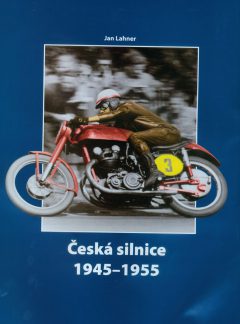
The author has been around road racing tracks since he was a boy. For just as long, he has been trying to extract from eyewitnesses the preserved memories, which are often contradictory. The long-standing idea of processing the "racing" part of the region's history received its final impetus this August at the Strahov Circuit. Going through his own extensive archive, he mobilized close friends and eyewitnesses, and delved into the ČTK archive to process the materials in the evenings. The result, delivered by the publisher in record time to bookshop shelves, will delight friends, fans and eyewitnesses of car and motorcycle racing. A number of previously unpublished facts and photographs will reveal completely new information about sporting events that have always attracted many competitors and spectators. Get yourself a wonderful read for long winter evenings.

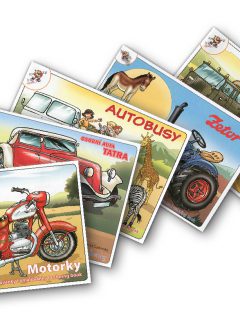
54 playing cards with photos of vintage motorcycles.

The publication captures almost unknown manufacturers and brands of motorcycles that were produced in the territory of the then Austria-Hungary. The reader will discover an incredible number of motorcycle manufacturers built in the vast majority of only one or a few pieces. Rapid changes in the development of motorcycle design are evident when compared with today's two-wheeled vehicles produced in large series. The publication is important in content for all friends of motorcycle history and the present.

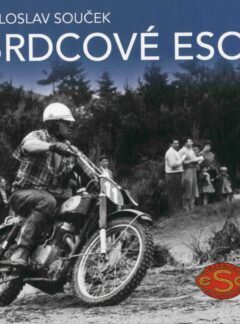
With the warm words of the foreword by Prof. Pavek, which will set the reader in the right mood, the author slowly begins to unwind a continuous strip of memories. About his apprenticeship in a car repair shop and his first contacts with motorcycle handlebars, about exploring off-road motorcycle races. It is absolutely natural that Míla Souček likes to remember motorcycle sports in the colors of the army team - of course, after all, he was young, healthy and overcame random life obstacles with a smile. A separate chapter in his life, to which the author likes to return, is the period of motorcycle competitions with participation in the Six-Day Motorcycle Competition in Zlín in 1955. Between the lines, the perceptive reader can sense the devotion to motorcycles from Divišov. With ESO motocross specials of all three cubic capacities, he achieved success for our colors on tracks included in the European Championship. The last pages of the memories belong to motocross in Stříbr in 1963.
Reminisce with the author, recall the names and motocross tracks in the country and abroad.

Eliška Junková as we don't know her! Taste buds are properly activated by the content divided into four separate sections: appetizers, soups, main courses and desserts. Between each course there is always a double page of copies taken from the original photographs from Mrs. Eliška's family album. Color photographs of the finished dish are supplemented on each page with brief, concise instructions on how to gradually process the ingredients. A motorist doesn't just live on gasoline - and what's more, Mrs. Eliška moved among men and knew what makes a success on a plate. Thank your partner for their year-round care with a nice book under the Christmas tree.