Product description
Hardcover, A4 format, 271 pages, Czech language


1 000,00 CZK
Hardcover, A4 format, 271 pages, Czech language
In stock
Hardcover, A4 format, 271 pages, Czech language
| Weight | 1,53 kg |
|---|
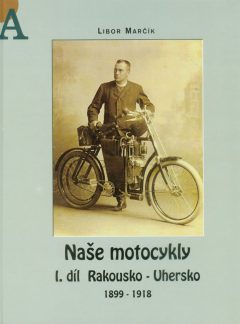
The publication captures almost unknown manufacturers and brands of motorcycles that were produced in the territory of the then Austria-Hungary. The reader will discover an incredible number of motorcycle manufacturers built in the vast majority of only one or a few pieces. Rapid changes in the development of motorcycle design are evident when compared with today's two-wheeled vehicles produced in large series. The publication is important in content for all friends of motorcycle history and the present.
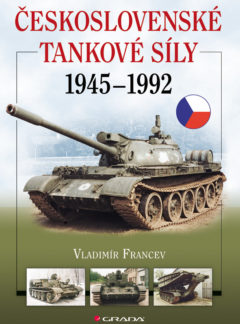
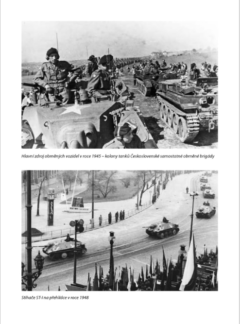
The author, who has already made his mark on readers' consciousness as a specialist and expert in mobile military equipment through the content of previous publications, has compiled an almost fifty-year history of tank units that formed the main striking force of the post-war Czechoslovak army. The text describes the individual phases of the development of armored vehicles in terms of design and progress, production base, organizational structure and expected use. Above all, political aspects influenced the development, production and internal army organization, but also the entire operation of the national economy, which in peacetime produced hundreds of tanks during the year at high financial costs and human resources. Statistics of domestic production with stunning numbers prove possible competition with the largest superpowers, such as the then USSR and the USA. The clear chronological form of the individual types, as well as the entire content of the new book, will refresh the memories of all who have mastered the described equipment, will delight experts, historians and expand the knowledge of fans and members of military clubs.
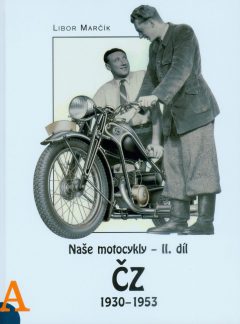
The text presents the history of motorcycle production in Strakonice in the period mentioned. It captures the development and production of individual types in technical data, taking into account design innovations, equipment and numbers of units produced. A unique and down to the smallest, seemingly insignificant details, description of individual motorcycle types from the first motorized bicycle to the last post-war type. A book that every history expert and owner of more than two motorcycles should have for everyday use.
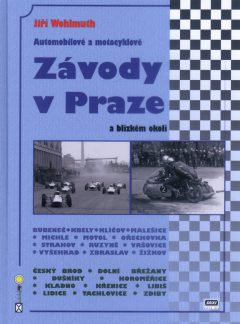
The author has been around road racing tracks since he was a boy. For just as long, he has been trying to extract from eyewitnesses the preserved memories, which are often contradictory. The long-standing idea of processing the "racing" part of the region's history received its final impetus this August at the Strahov Circuit. Going through his own extensive archive, he mobilized close friends and eyewitnesses, and delved into the ČTK archive to process the materials in the evenings. The result, delivered by the publisher in record time to bookshop shelves, will delight friends, fans and eyewitnesses of car and motorcycle racing. A number of previously unpublished facts and photographs will reveal completely new information about sporting events that have always attracted many competitors and spectators. Get yourself a wonderful read for long winter evenings.
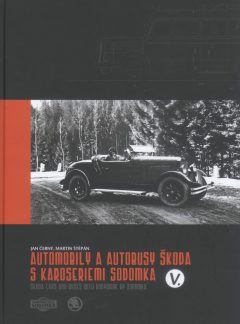
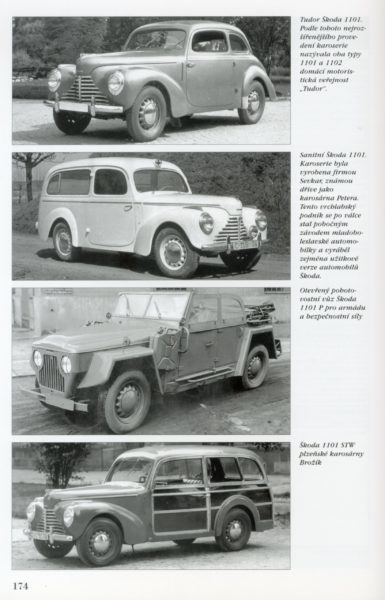
The fifth volume, prepared by a proven pair of authors in the same style as the previous four publications. The content mainly includes original black-and-white company photographs, a significant part of which is published for the first time. Copies of period prints, production drawings, dimensional sketches, business and custom books, business correspondence and original technical descriptions of individual types are supplemented with subtitles and texts in Czech and English. The book, rich in content and volume, is a joy for anyone who owns the previous four volumes and promises further volumes introducing other production brands equipped with bodies from the Sodomka company from Vysoké Mýto.
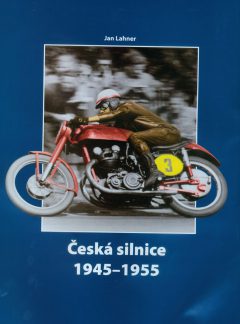
A lifelong passion for motorcycle racing, careful study of archives, collection of memories of eyewitnesses and period photographs, programs of long-forgotten races and newspaper clippings, translated into clearly arranged 270 large-format pages in hardcover. This is what Jan Lahner's magnum opus, Czechoslovak Roads 1945-1955, looks like. Renowned motoring historian Jan Lahner has compiled a unique work documenting motorcycle racing on our roads in the first post-war decade. Each year of this period is dedicated to one chapter, describing in detail individual motorcycle races. Each chapter is supplemented by biographies of the racers who met in those years on road races and formed the top of the time. The lives of racers such as Kostlivec, Bubeníček, Lucák, Dusil, Kněz, Jiří and Jaroslav Simandl, or Jiří Koštíř and many others have not yet been published anywhere. Similarly, many of the more than 600 black and white photographs contained in the book have not yet been known to the public. The last chapters contain technical descriptions of interesting racing motorcycles and a clearly arranged table of all recorded race results.
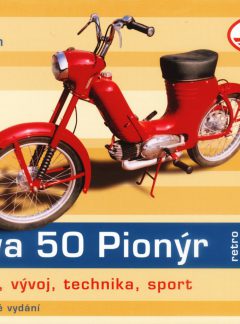
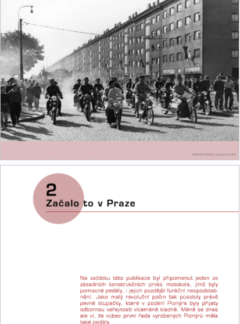
The second edition of this unique publication supplements and clarifies some previously published facts about the history and technical parameters of this small-displacement motorcycle. The history of the very latest machines from the World Championship is newly recalled and data on current activities on the racing field are added. This edition contains more than half of the new, previously unpublished photographs.
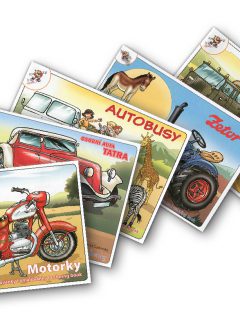
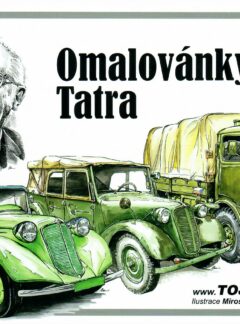
Coloring book containing 8 colorful images of historical vehicles.