Product description
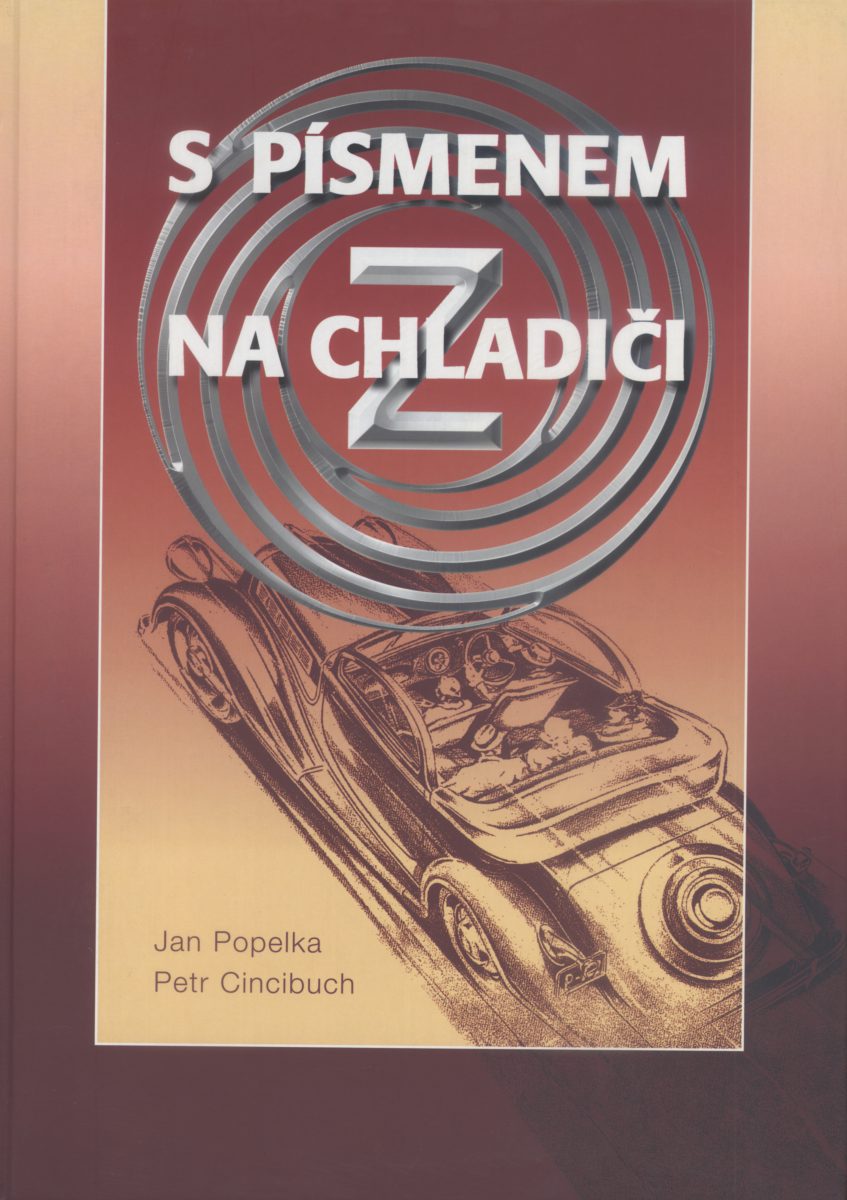
Unium Publishing House, hardcover, format 21.5 x 30 cm, 160 pages.
ISBN: 80-902542-2-5.
850,00 CZK
In stock
Unium Publishing House, hardcover, format 21.5 x 30 cm, 160 pages.
ISBN: 80-902542-2-5.
| Weight | 0,895 kg |
|---|


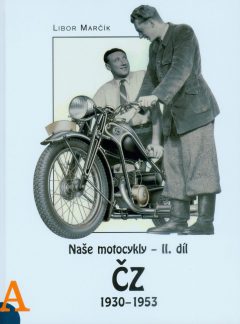
The text presents the history of motorcycle production in Strakonice in the period mentioned. It captures the development and production of individual types in technical data, taking into account design innovations, equipment and numbers of units produced. A unique and down to the smallest, seemingly insignificant details, description of individual motorcycle types from the first motorized bicycle to the last post-war type. A book that every history expert and owner of more than two motorcycles should have for everyday use.
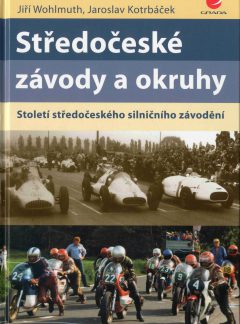
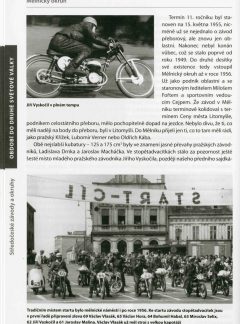
Acceptable distances between populated places, as well as a good road network in Central Bohemia, have made it possible to write an interesting history of racing in this region. Long-distance races, hill races and city circuits began to be held here more than 110 years ago. In many towns, racing had only a fleeting existence and after the first year, no more followed (Kralupy nad Vltavou, Vlašim, Horoměřice, Roztoky u Prahy). However, there were places where racing took place for several decades (Městec Králové – 40 years; Kolín – 16 years; Mělník – 13 years). For each of the thirty-nine places, the authors found the exact race routes, information from the organizing activities and result lists with the names of competitors, both known and unknown, and spiced everything up with interesting facts from the period press. Witnesses will reminisce over the pages, and representatives of the younger generations will wonder where and on what roads the racers fought for supremacy.
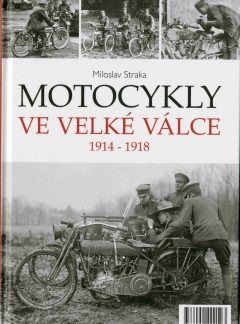
Another in a series of works by the renowned author deals with motorcycle history again, this time against the backdrop of World War I. It is published at a time when a hundred years have passed since its course, and the consequences of which fatally influenced the further development of all sectors in Europe. The book is not a historical study of the war, but has the ambition to present the role of motorcycles and the soldiers who served with them in the war. Motorcycles in the Great War performed a number of specific tasks. In addition to the very important courier service, they also served in ambulance and reconnaissance services. Armies used motorcycles on almost all battlefields, but the largest number was on the Western Front on the side of the Allies. The book introduces readers to individual variants of military machines, technical details, a detailed description of the most used models and the history of the brands represented. The publication brings a lot of interesting information not only to our regular fans of motorcycle history, but should also appeal to fans of military history and militaries in general.
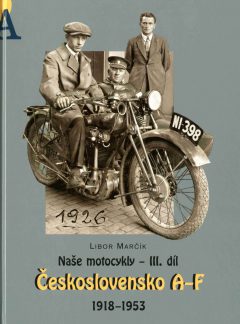
Libor Marčík has already proven his authorial qualities in two previous works on motorcycle history and, in addition to his two recent publications, is now publishing, again at his own expense, another descriptive continuation of Czechoslovak motorcycle history. Years of painstaking work searching in the period press, in state and private archives, as well as examining entries in Latin, German or even in Hungarian-written books written in many registries are rewarded on graphically well-crafted pages. Long-forgotten manufacturers who sought ways of technical development through piece production are listed alphabetically. The carefully crafted text, supplemented by many original photographs, will delight historians and laymen alike, and in the company of the previous two works, a hint of a future complete history of motorcycle production from the times of the Austro-Hungarian Empire to the Czech Republic will begin to emerge in many libraries.
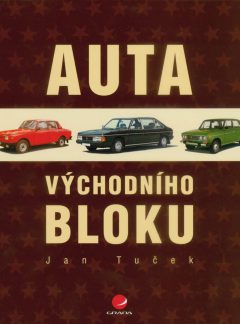
Škoda, Tatra, Trabant, Wartburg, Polski Fiat, Dacia, Oltcit, Moskvich, Lada, Volga and other brands were an integral part of the pre-November era. Sometimes we turned our noses up at them and longed for something better. However, most of us had no choice. Today we can laugh about it, but we should not forget. Not only about that time, but also about the cars we drove back then.
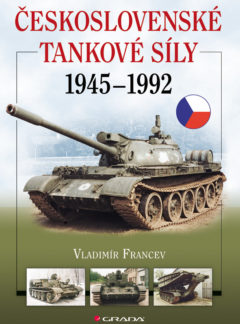
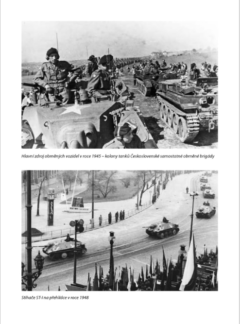
The author, who has already made his mark on readers' consciousness as a specialist and expert in mobile military equipment through the content of previous publications, has compiled an almost fifty-year history of tank units that formed the main striking force of the post-war Czechoslovak army. The text describes the individual phases of the development of armored vehicles in terms of design and progress, production base, organizational structure and expected use. Above all, political aspects influenced the development, production and internal army organization, but also the entire operation of the national economy, which in peacetime produced hundreds of tanks during the year at high financial costs and human resources. Statistics of domestic production with stunning numbers prove possible competition with the largest superpowers, such as the then USSR and the USA. The clear chronological form of the individual types, as well as the entire content of the new book, will refresh the memories of all who have mastered the described equipment, will delight experts, historians and expand the knowledge of fans and members of military clubs.
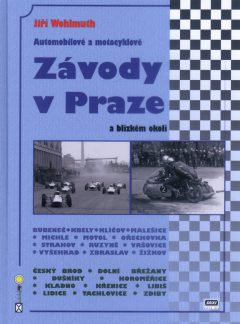
The author has been around road racing tracks since he was a boy. For just as long, he has been trying to extract from eyewitnesses the preserved memories, which are often contradictory. The long-standing idea of processing the "racing" part of the region's history received its final impetus this August at the Strahov Circuit. Going through his own extensive archive, he mobilized close friends and eyewitnesses, and delved into the ČTK archive to process the materials in the evenings. The result, delivered by the publisher in record time to bookshop shelves, will delight friends, fans and eyewitnesses of car and motorcycle racing. A number of previously unpublished facts and photographs will reveal completely new information about sporting events that have always attracted many competitors and spectators. Get yourself a wonderful read for long winter evenings.
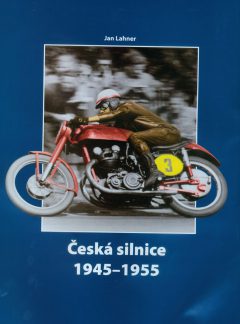
A lifelong passion for motorcycle racing, careful study of archives, collection of memories of eyewitnesses and period photographs, programs of long-forgotten races and newspaper clippings, translated into clearly arranged 270 large-format pages in hardcover. This is what Jan Lahner's magnum opus, Czechoslovak Roads 1945-1955, looks like. Renowned motoring historian Jan Lahner has compiled a unique work documenting motorcycle racing on our roads in the first post-war decade. Each year of this period is dedicated to one chapter, describing in detail individual motorcycle races. Each chapter is supplemented by biographies of the racers who met in those years on road races and formed the top of the time. The lives of racers such as Kostlivec, Bubeníček, Lucák, Dusil, Kněz, Jiří and Jaroslav Simandl, or Jiří Koštíř and many others have not yet been published anywhere. Similarly, many of the more than 600 black and white photographs contained in the book have not yet been known to the public. The last chapters contain technical descriptions of interesting racing motorcycles and a clearly arranged table of all recorded race results.