Product description
Published by the National Technical Museum Prague
320,00 CZK
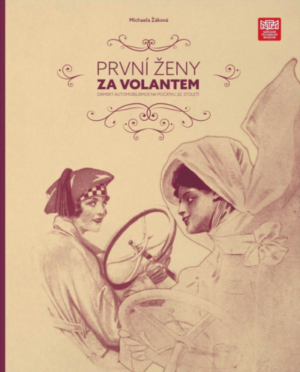
The publication deals with the relationship between women and cars in the so-called pioneering period of motoring (until 1918). In a total of five chapters, it deals with both the very beginnings of women's motoring before 1900, as well as specific forms of car use and the roots of the phenomenon of women as bad drivers that persists to this day. The book also outlines the difficult beginnings of women's motoring and describes the pitfalls of contemporary motoring fashion. The final chapter deals with the role of women in promoting car brands.
In stock
| Weight | 0,355 kg |
|---|

Published by the Technical Museum in Brno
Softcover, format 16.5 × 24 cm, 190 pages
On February 7, 2020, the book launch of the head of the State District Archive in Děčín, Jan Němec, Motorists on and under Šébr took place at the Technical Museum in Brno.
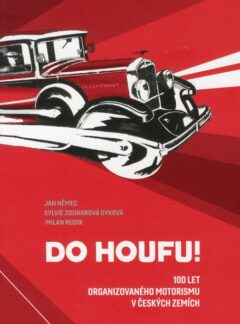
Pre-war Czechoslovakia had long underestimated the potential of motoring and left car and motorcycle owners to help themselves. In our over-motorized present, drivers would be surprised to find themselves having to procure road signs, pay for winter maintenance and constantly ask for improvements to roads that cost nothing. In order to be heard, drivers formed associations, of which there were around a hundred, which fought each other for members. The German car club "Nordböhmischer Kraftfahrerbund" in Rumburk managed to unite almost 2,000 motorists and its voice carried weight. It was one of the few to cooperate closely with the Car Club of the Czechoslovak Republic and for a long time put the interests of drivers above national and political interests. It organised popular races, published a magazine, gave lectures and fought tirelessly for domestic driving.
This is yet another masterpiece by an author known for his book, The Legendary Motorcycle of the Czech Republic. We recommend that anyone who is eager to buy the book, they will not regret it.

Published by NTM Prague
Softcover, format 17 x 20.5 cm, 127 pages
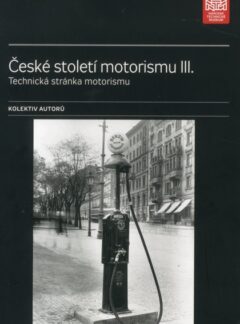
The publication is a list of contributions presented at the workshop Czech Century of Motoring III – Technical Side of Motoring held in the cinema hall of the National Technical Museum on September 13, 2021. Other studies were also published that were created as part of the NAKI II project Czech Century of Motoring, which is being implemented in 2018–2022 by the Faculty of Humanities of Charles University (Part I), the Technical Museum in Brno (Part II) and the National Technical Museum (Part III).


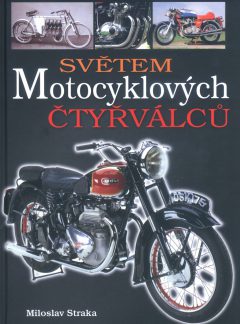
The author has compiled the history of the development and production of four-cylinder engines for motorcycles from the first preserved types. After a three-page introduction to the subject, there is the first of the structurally interesting motorcycles with a four-cylinder engine, where we also have a proud world first: the Laurin & Klement with an in-line four-cylinder engine made in Austria-Hungary. From a chronological perspective, various design directions are interesting, often avant-garde, but also some less fortunate ones, which were often limited by the possibilities of workshop processing. The theoretical idea of the designer was timeless, but the appropriate technology had not yet been produced. Detailed technical descriptions of another twenty-five structurally interesting motorcycles of often no longer existing production brands will certainly interest readers of all age groups.

The Tatra 805 light truck was developed in the early 1950s – at a time when the whole of Europe was slowly recovering from the consequences of World War II. The first pages will acquaint readers with the then level of motorization of our army, which primarily initiated the need for a mobile 1.5-ton vehicle. In addition to the basic versions of the flatbed and box, other single-purpose superstructures were built on the existing chassis to perform specific army tasks. The comprehensive text will explain to readers what individual designations such as Šárka, Jarmila, Ezop, Mozek, Třinec and Neděle meant. The difficult-to-understand delimitations and transfers of the final assemblies of the T 805 between production plants are still evidence of „planned“ mistakes. Previously unpublished photographs, clearly arranged technical tables and drawings will remind witnesses of the „eight hundred and five“ from common army and civilian versions to unknown prototypes. The publication will help readers of younger generations understand technical possibilities in the context of the time.

Libor Marčík has already proven his authorial qualities in two previous works on motorcycle history and, in addition to his two recent publications, is now publishing, again at his own expense, another descriptive continuation of Czechoslovak motorcycle history. Years of painstaking work searching in the period press, in state and private archives, as well as examining entries in Latin, German or even in Hungarian-written books written in many registries are rewarded on graphically well-crafted pages. Long-forgotten manufacturers who sought ways of technical development through piece production are listed alphabetically. The carefully crafted text, supplemented by many original photographs, will delight historians and laymen alike, and in the company of the previous two works, a hint of a future complete history of motorcycle production from the times of the Austro-Hungarian Empire to the Czech Republic will begin to emerge in many libraries.

With the warm words of the foreword by Prof. Pavek, which will set the reader in the right mood, the author slowly begins to unwind a continuous strip of memories. About his apprenticeship in a car repair shop and his first contacts with motorcycle handlebars, about exploring off-road motorcycle races. It is absolutely natural that Míla Souček likes to remember motorcycle sports in the colors of the army team - of course, after all, he was young, healthy and overcame random life obstacles with a smile. A separate chapter in his life, to which the author likes to return, is the period of motorcycle competitions with participation in the Six-Day Motorcycle Competition in Zlín in 1955. Between the lines, the perceptive reader can sense the devotion to motorcycles from Divišov. With ESO motocross specials of all three cubic capacities, he achieved success for our colors on tracks included in the European Championship. The last pages of the memories belong to motocross in Stříbr in 1963.
Reminisce with the author, recall the names and motocross tracks in the country and abroad.

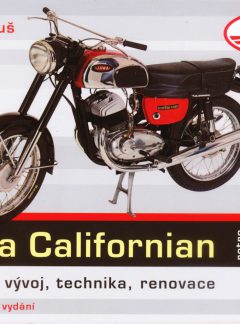
Jawa Californian – motorcycles that, with some exceptions, were intended only for foreign customers, leave hardly any one-track fan indifferent. The second edition of the successful publication will reveal what preceded their creation, how they developed and what influenced the sale of motorcycles from Czechoslovak manufacturers to the North American continent since 1945.

„"Kývačky" were in production since 1954. In the beginning it was a motorcycle of modern design and due to the limited range of offer it became the most widespread type on domestic roads. The chassis was universal, suitable for mounting two-stroke air-cooled engines of five displacement classes.
The first pages of the book contain a brief introduction with a quick overview of pre-war production. The rest of the content will enlighten the reader about the extensive history with period photographs of prototypes, dimensional sketches, photographs of sports and civilian versions from period newspapers, and detailed descriptions of the differences between the individual types. The chapters also focus on important figures involved in development and production, motorcycle racers of all categories, sales abroad, and the book also contains a reprint of part of the manual, copies of period brochures, and extensive technical tables.

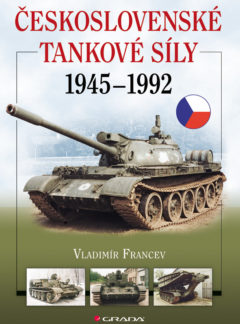
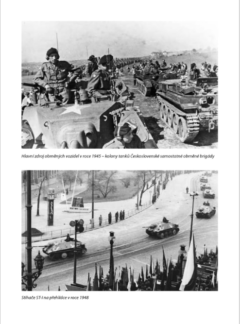
The author, who has already made his mark on readers' consciousness as a specialist and expert in mobile military equipment through the content of previous publications, has compiled an almost fifty-year history of tank units that formed the main striking force of the post-war Czechoslovak army. The text describes the individual phases of the development of armored vehicles in terms of design and progress, production base, organizational structure and expected use. Above all, political aspects influenced the development, production and internal army organization, but also the entire operation of the national economy, which in peacetime produced hundreds of tanks during the year at high financial costs and human resources. Statistics of domestic production with stunning numbers prove possible competition with the largest superpowers, such as the then USSR and the USA. The clear chronological form of the individual types, as well as the entire content of the new book, will refresh the memories of all who have mastered the described equipment, will delight experts, historians and expand the knowledge of fans and members of military clubs.

A wide period from the establishment of an independent republic through the years of economic crisis, the protectorate and up to 1953, when a classless society was fully built with the help of obligations - these are the years that the author chose for the next presentation of some motorcycle manufacturers. The author filled the clearly arranged pages of the next part of his extensive publication with the production marks or surnames of workshop owners that begin with one of the three letters M, N, O. Period print, brochures, drawings, dimensional sketches, photographs, official documents replacing technical certificates and other archive materials were suitably used to bring the history of motorcycle production in Czechoslovakia closer. The author has been a guarantee of extremely interesting discoveries with a specialization in two-wheeled vehicles for many years.