Product description
Unium Publishing House, hardcover, format 21.5 x 30 cm, 160 pages.
ISBN: 80-902542-2-5.
Original price was: 850,00 Kč.850,00 CZKCurrent price is: 850,00 Kč.
In stock
Unium Publishing House, hardcover, format 21.5 x 30 cm, 160 pages.
ISBN: 80-902542-2-5.
| Weight | 0,895 kg |
|---|


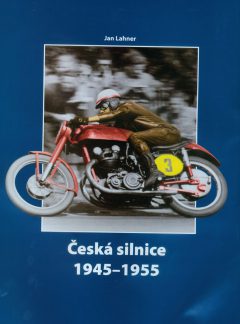
A lifelong passion for motorcycle racing, careful study of archives, collection of memories of eyewitnesses and period photographs, programs of long-forgotten races and newspaper clippings, translated into clearly arranged 270 large-format pages in hardcover. This is what Jan Lahner's magnum opus, Czechoslovak Roads 1945-1955, looks like. Renowned motoring historian Jan Lahner has compiled a unique work documenting motorcycle racing on our roads in the first post-war decade. Each year of this period is dedicated to one chapter, describing in detail individual motorcycle races. Each chapter is supplemented by biographies of the racers who met in those years on road races and formed the top of the time. The lives of racers such as Kostlivec, Bubeníček, Lucák, Dusil, Kněz, Jiří and Jaroslav Simandl, or Jiří Koštíř and many others have not yet been published anywhere. Similarly, many of the more than 600 black and white photographs contained in the book have not yet been known to the public. The last chapters contain technical descriptions of interesting racing motorcycles and a clearly arranged table of all recorded race results.
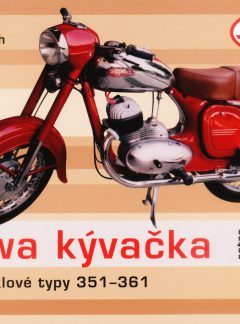
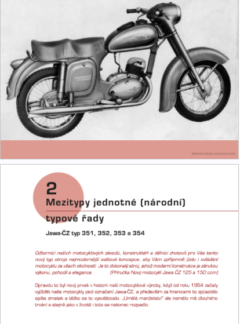
„"Kývačky" were in production since 1954. In the beginning it was a motorcycle of modern design and due to the limited range of offer it became the most widespread type on domestic roads. The chassis was universal, suitable for mounting two-stroke air-cooled engines of five displacement classes.
The first pages of the book contain a brief introduction with a quick overview of pre-war production. The rest of the content will enlighten the reader about the extensive history with period photographs of prototypes, dimensional sketches, photographs of sports and civilian versions from period newspapers, and detailed descriptions of the differences between the individual types. The chapters also focus on important figures involved in development and production, motorcycle racers of all categories, sales abroad, and the book also contains a reprint of part of the manual, copies of period brochures, and extensive technical tables.
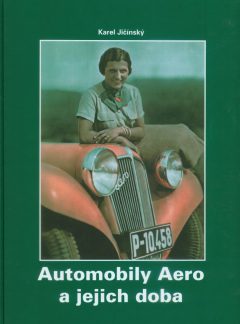
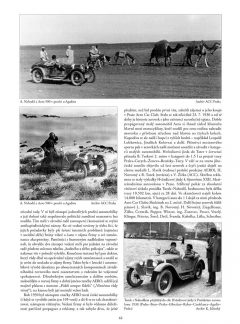
Descriptions of individual types, copies of drawing documentation and a number of original photographs, placed in the context of the time, have created an engaging document. The author has long been dedicated to collecting materials directly related to the Aero brand, and has put this many years of activity to good use in a publication that should not be missing from the library of any aero enthusiast.
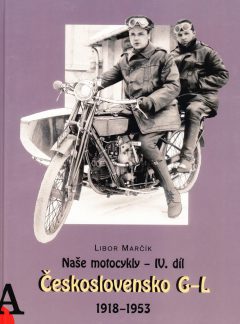
Another part of the extensive work of the author and historian. Already on the page with the contents, the reader will find out that in a sector of only seven letters in alphabetical order, there were 72 motorcycle brands operating in our republic. Small locksmith workshops that produced a single motorcycle or applied a drive unit to a bicycle frame are also captured. Rarely preserved materials have been enriched here with high-quality processing, from graphic preparation to the selection of materials used. The publication will once again significantly advance detailed knowledge of the history of motorcycle production. Libor Marčík's representative publications are always a suitable gift for all motorists, regardless of age or focus.
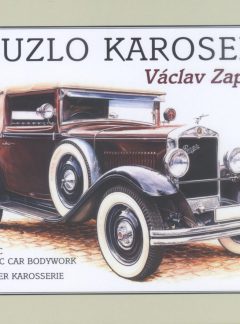
Maestro Zapadlík has finally been persuaded and, with the help of friends, has created a review of his own works. In the first lines he defends the motivation for creating another pleasing work, which is still not a comprehensive review of his entire work. The Maestro stated literally: "„The publication was inspired by the response of those readers who appreciate the drawing in its often simple line. Therefore, the decision to publish the drawings that were created for a number of magazines more than twenty years ago is a kind of retrospective. In times when the reproduction of an image was difficult and often on very poor quality paper, black and white drawing was probably a good solution for illustrating sometimes even the technical details of cars and their parts.“Views of the delicate shapes of Zapadlík's car bodies can transport the reader to another world and influence aesthetic perception.
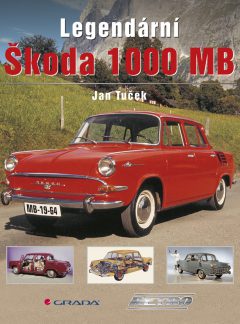
For readers interested in the history of motoring, a book about the development, preparation and mass production of the Czech passenger car has been prepared on the occasion of the 50th anniversary of the Škoda 1000 MB. The first part contains a brief recapitulation of the post-war predecessors from 1946 to 1964. A number of previously unpublished photographs will present prototypes and serial "thousands". The content offers high-quality and verified information about technical parameters, interesting facts from production, the number of units produced for the domestic and foreign markets, and sporting successes.
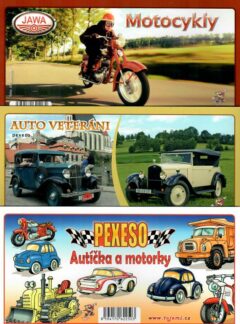
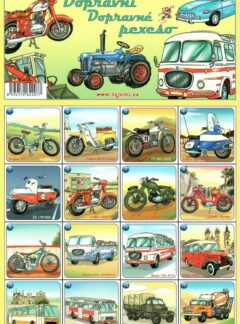
Memory game consisting of 32 pairs of photographs of historical means of transport.
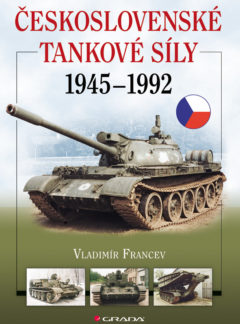
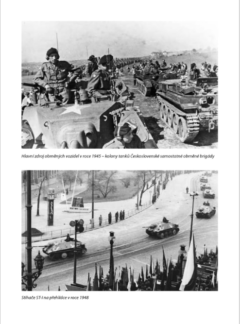
The author, who has already made his mark on readers' consciousness as a specialist and expert in mobile military equipment through the content of previous publications, has compiled an almost fifty-year history of tank units that formed the main striking force of the post-war Czechoslovak army. The text describes the individual phases of the development of armored vehicles in terms of design and progress, production base, organizational structure and expected use. Above all, political aspects influenced the development, production and internal army organization, but also the entire operation of the national economy, which in peacetime produced hundreds of tanks during the year at high financial costs and human resources. Statistics of domestic production with stunning numbers prove possible competition with the largest superpowers, such as the then USSR and the USA. The clear chronological form of the individual types, as well as the entire content of the new book, will refresh the memories of all who have mastered the described equipment, will delight experts, historians and expand the knowledge of fans and members of military clubs.