Product description
Hardcover, A4 format, 423 pages, German language
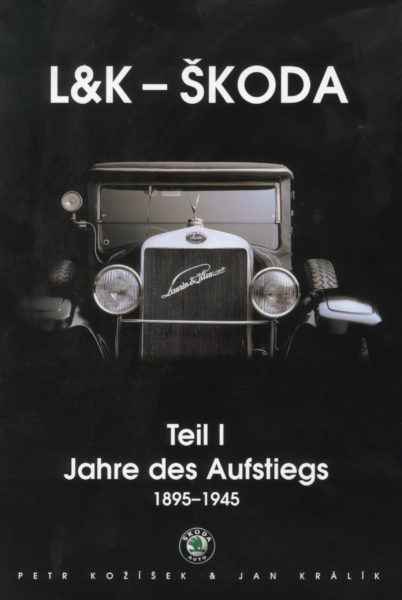


1 000,00 CZK
Hardcover, A4 format, 423 pages, Czech language
In stock
Hardcover, A4 format, 423 pages, German language
| Weight | 2,185 kg |
|---|
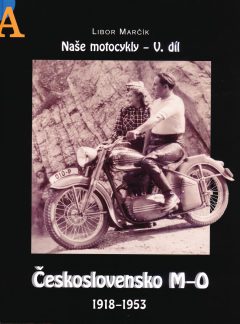
A wide period from the establishment of an independent republic through the years of economic crisis, the protectorate and up to 1953, when a classless society was fully built with the help of obligations - these are the years that the author chose for the next presentation of some motorcycle manufacturers. The author filled the clearly arranged pages of the next part of his extensive publication with the production marks or surnames of workshop owners that begin with one of the three letters M, N, O. Period print, brochures, drawings, dimensional sketches, photographs, official documents replacing technical certificates and other archive materials were suitably used to bring the history of motorcycle production in Czechoslovakia closer. The author has been a guarantee of extremely interesting discoveries with a specialization in two-wheeled vehicles for many years.
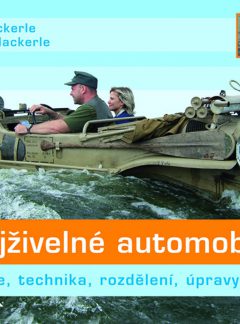
The automobile has always belonged on the road. From the very beginning, when it came into practical use, there were also daredevils who, after modifications, tried to conquer water on their own. The publication is a guide with illustrations, but also an encyclopedia of amphibious vehicles. It maps the area of military, off-road and passenger vehicles capable of overcoming watercourses under their own power. This part of automotive history and the present has not yet been processed on the domestic book market. The content explains the theoretical foundations of vehicle movement in water, through the history of the emergence of amphibians to the technical parameters of military, off-road and passenger amphibious vehicles from the pre-war period to the present. The authors also recall remarkable amateur creations and expeditions. Recommended reading for adventurous natures, but perhaps also a non-standard topic for planning a vacation for next year.
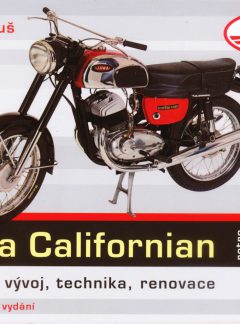
Jawa Californian – motorcycles that, with some exceptions, were intended only for foreign customers, leave hardly any one-track fan indifferent. The second edition of the successful publication will reveal what preceded their creation, how they developed and what influenced the sale of motorcycles from Czechoslovak manufacturers to the North American continent since 1945.

The author has been around road racing tracks since he was a boy. For just as long, he has been trying to extract from eyewitnesses the preserved memories, which are often contradictory. The long-standing idea of processing the "racing" part of the region's history received its final impetus this August at the Strahov Circuit. Going through his own extensive archive, he mobilized close friends and eyewitnesses, and delved into the ČTK archive to process the materials in the evenings. The result, delivered by the publisher in record time to bookshop shelves, will delight friends, fans and eyewitnesses of car and motorcycle racing. A number of previously unpublished facts and photographs will reveal completely new information about sporting events that have always attracted many competitors and spectators. Get yourself a wonderful read for long winter evenings.
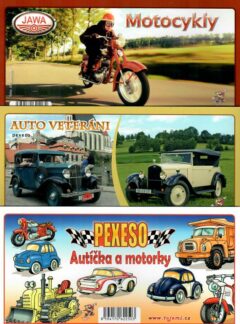
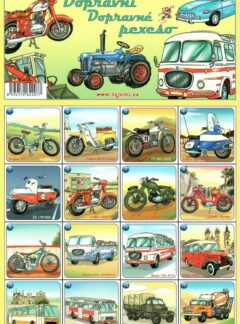
Memory game consisting of 32 pairs of photographs of historical means of transport.
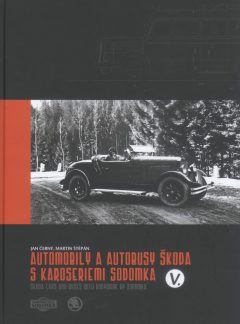
The fifth volume, prepared by a proven pair of authors in the same style as the previous four publications. The content mainly includes original black-and-white company photographs, a significant part of which is published for the first time. Copies of period prints, production drawings, dimensional sketches, business and custom books, business correspondence and original technical descriptions of individual types are supplemented with subtitles and texts in Czech and English. The book, rich in content and volume, is a joy for anyone who owns the previous four volumes and promises further volumes introducing other production brands equipped with bodies from the Sodomka company from Vysoké Mýto.
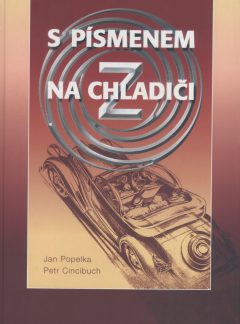
Unium Publishing House, hardcover, format 21.5 x 30 cm, 160 pages. ISBN: 80-902542-2-5.
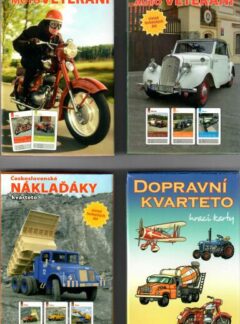
32 playing cards with pictures of vintage vehicles. The game includes instructions.