Product description
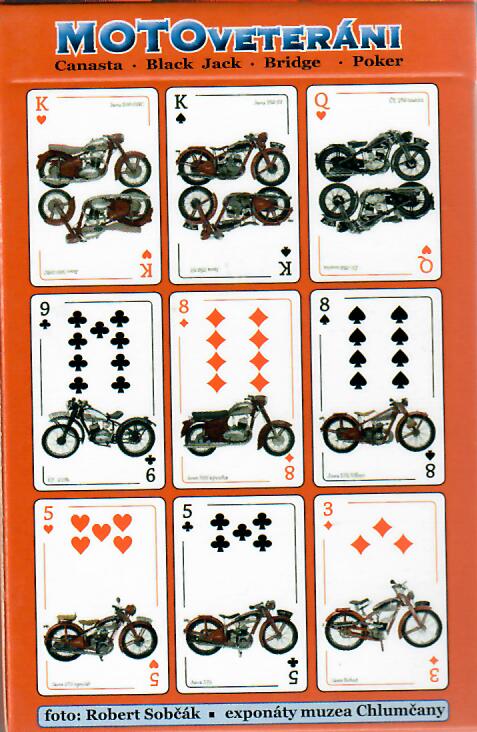
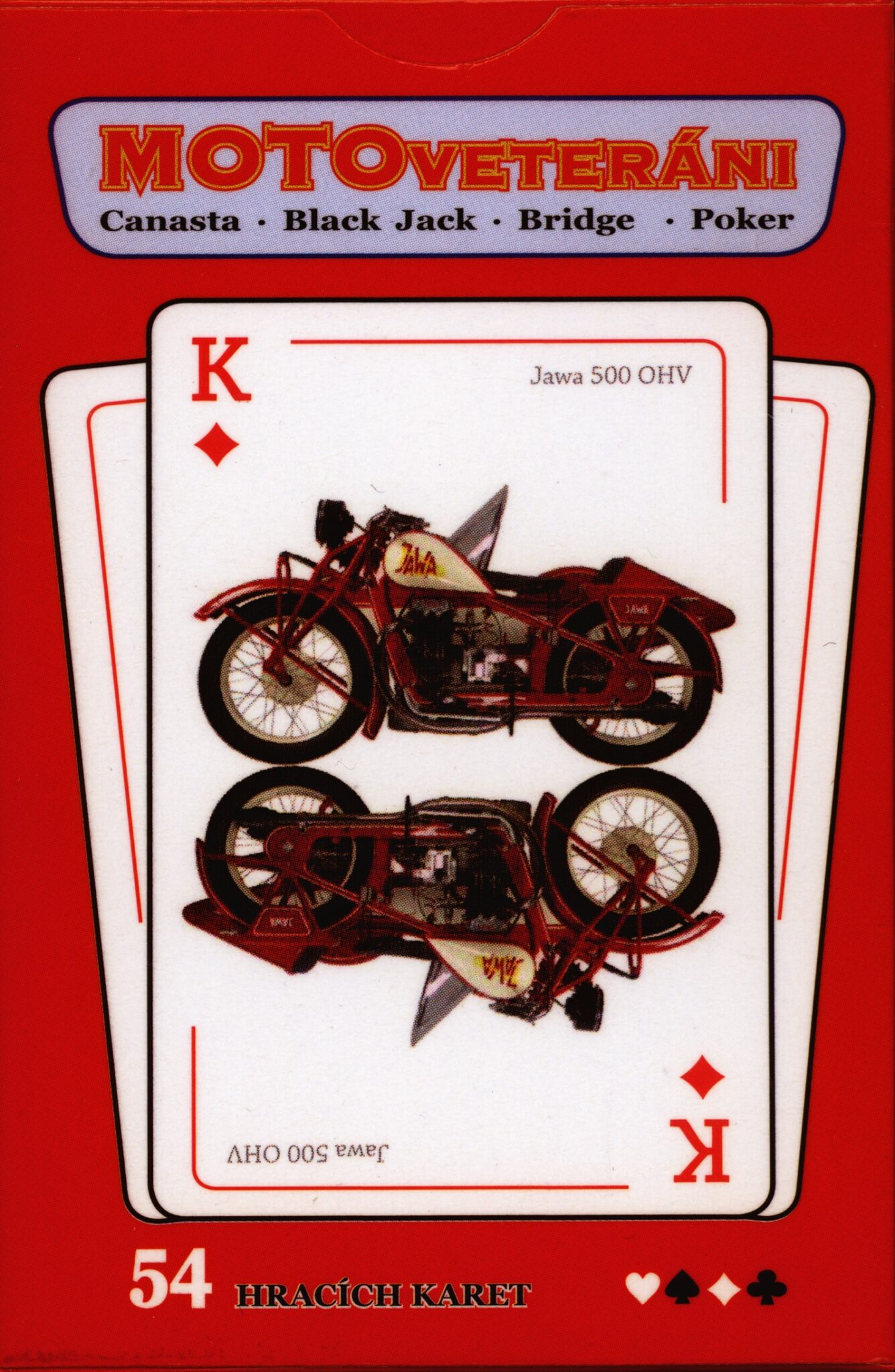
54 playing cards with photos of vintage motorcycles.


90,00 CZK
54 playing cards with photos of vintage motorcycles.
In stock
54 playing cards with photos of vintage motorcycles.
| Weight | 0,11 kg |
|---|
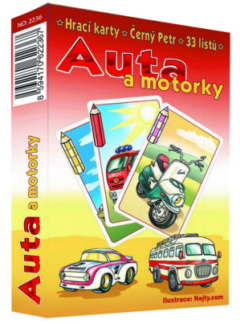
33 playing cards with painted pictures of vintage vehicles. Includes instructions for the game. The game is suitable for three or more players.
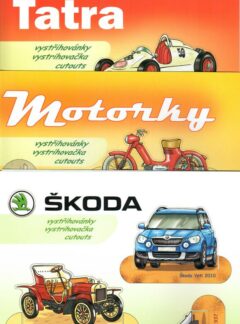
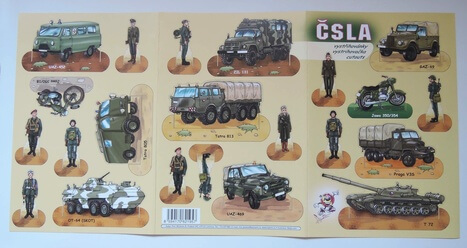
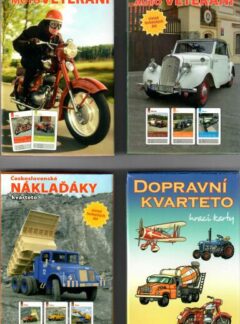
32 playing cards with pictures of vintage vehicles. The game includes instructions.
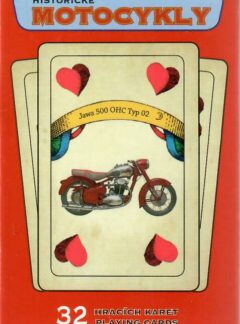
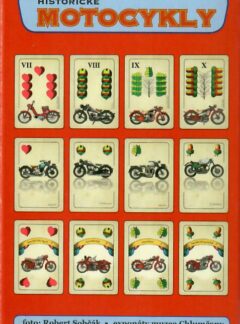
32 playing cards with photos of vintage motorcycles.
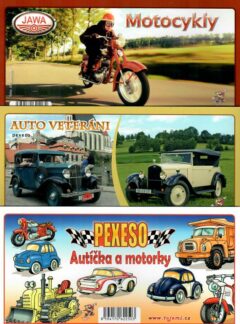
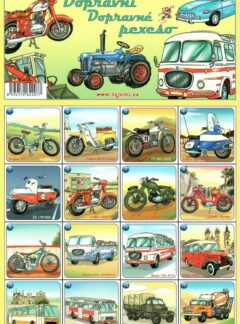
Memory game consisting of 32 pairs of photographs of historical means of transport.
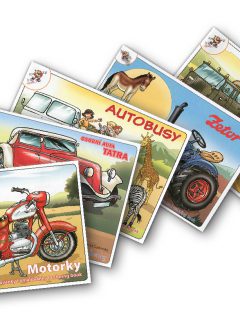
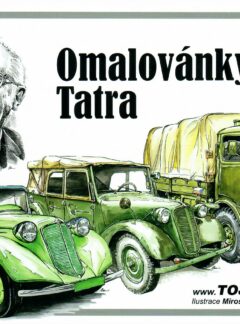
Coloring book containing 8 colorful images of historical vehicles.
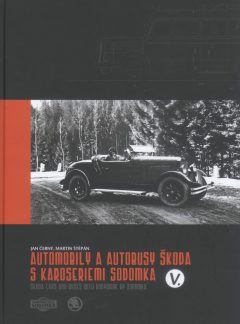
The fifth volume, prepared by a proven pair of authors in the same style as the previous four publications. The content mainly includes original black-and-white company photographs, a significant part of which is published for the first time. Copies of period prints, production drawings, dimensional sketches, business and custom books, business correspondence and original technical descriptions of individual types are supplemented with subtitles and texts in Czech and English. The book, rich in content and volume, is a joy for anyone who owns the previous four volumes and promises further volumes introducing other production brands equipped with bodies from the Sodomka company from Vysoké Mýto.
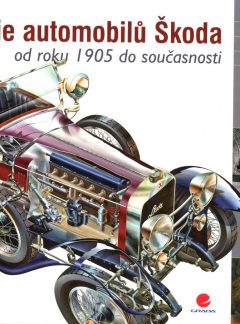
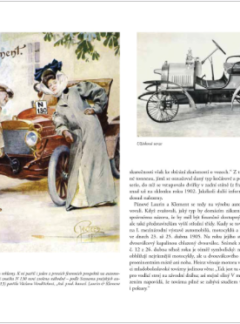
A selection of the most famous cars produced in Mladá Boleslav. The technical development of cars is evident in the individual types from the first Laurinka to the present. Each model is presented in a detailed technical transparency by Jiří Dufek, supplemented by other technical drawings or examples of drawing documentation. The profile of each of the cars on display is illustrated in detail by color and black-and-white photographs from the archives of the authors and the car manufacturer. A large amount of visual material is connected by interesting texts by Jan Králík about the development of individual models, their production and sporting successes, and it also introduces several personalities from the many who have contributed to the success or fame of Mladá Boleslav cars. The narrative color book will delight anyone who is at least a little interested in cars and will certainly appeal to die-hard fans of Škoda cars.
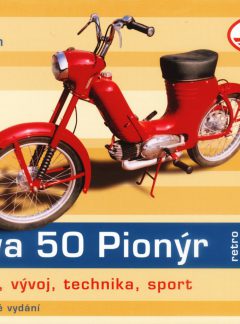
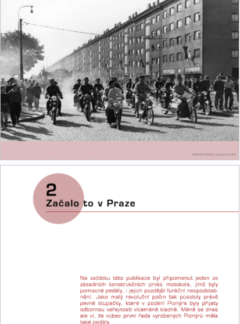
The second edition of this unique publication supplements and clarifies some previously published facts about the history and technical parameters of this small-displacement motorcycle. The history of the very latest machines from the World Championship is newly recalled and data on current activities on the racing field are added. This edition contains more than half of the new, previously unpublished photographs.
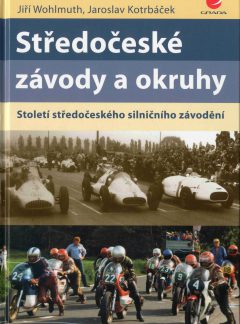
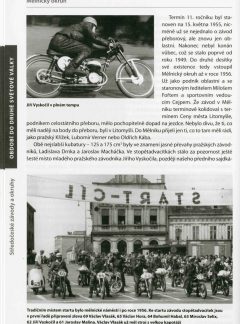
Acceptable distances between populated places, as well as a good road network in Central Bohemia, have made it possible to write an interesting history of racing in this region. Long-distance races, hill races and city circuits began to be held here more than 110 years ago. In many towns, racing had only a fleeting existence and after the first year, no more followed (Kralupy nad Vltavou, Vlašim, Horoměřice, Roztoky u Prahy). However, there were places where racing took place for several decades (Městec Králové – 40 years; Kolín – 16 years; Mělník – 13 years). For each of the thirty-nine places, the authors found the exact race routes, information from the organizing activities and result lists with the names of competitors, both known and unknown, and spiced everything up with interesting facts from the period press. Witnesses will reminisce over the pages, and representatives of the younger generations will wonder where and on what roads the racers fought for supremacy.
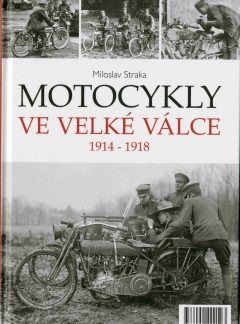
Another in a series of works by the renowned author deals with motorcycle history again, this time against the backdrop of World War I. It is published at a time when a hundred years have passed since its course, and the consequences of which fatally influenced the further development of all sectors in Europe. The book is not a historical study of the war, but has the ambition to present the role of motorcycles and the soldiers who served with them in the war. Motorcycles in the Great War performed a number of specific tasks. In addition to the very important courier service, they also served in ambulance and reconnaissance services. Armies used motorcycles on almost all battlefields, but the largest number was on the Western Front on the side of the Allies. The book introduces readers to individual variants of military machines, technical details, a detailed description of the most used models and the history of the brands represented. The publication brings a lot of interesting information not only to our regular fans of motorcycle history, but should also appeal to fans of military history and militaries in general.
New book from the warehouse.
The author, in his own unique way, expressed his admiration for the Sisyphean effort of all collectors and renovators of cars, buses, motorcycles or stationary engines, for their lifelong toil, which at the very end of this journey we can admire and say that our grandfathers knew how to make it, after all, that machine actually has a soul... The fates of these passionate fans and their collections are all the more interesting because after 30 years a lot has changed. Jiří Wagner accompanied the book with his photographs.

The author has been around road racing tracks since he was a boy. For just as long, he has been trying to extract from eyewitnesses the preserved memories, which are often contradictory. The long-standing idea of processing the "racing" part of the region's history received its final impetus this August at the Strahov Circuit. Going through his own extensive archive, he mobilized close friends and eyewitnesses, and delved into the ČTK archive to process the materials in the evenings. The result, delivered by the publisher in record time to bookshop shelves, will delight friends, fans and eyewitnesses of car and motorcycle racing. A number of previously unpublished facts and photographs will reveal completely new information about sporting events that have always attracted many competitors and spectators. Get yourself a wonderful read for long winter evenings.
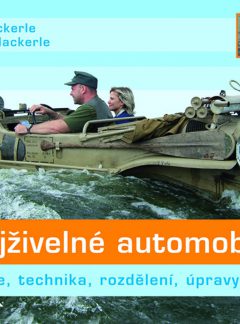
The automobile has always belonged on the road. From the very beginning, when it came into practical use, there were also daredevils who, after modifications, tried to conquer water on their own. The publication is a guide with illustrations, but also an encyclopedia of amphibious vehicles. It maps the area of military, off-road and passenger vehicles capable of overcoming watercourses under their own power. This part of automotive history and the present has not yet been processed on the domestic book market. The content explains the theoretical foundations of vehicle movement in water, through the history of the emergence of amphibians to the technical parameters of military, off-road and passenger amphibious vehicles from the pre-war period to the present. The authors also recall remarkable amateur creations and expeditions. Recommended reading for adventurous natures, but perhaps also a non-standard topic for planning a vacation for next year.