Product description
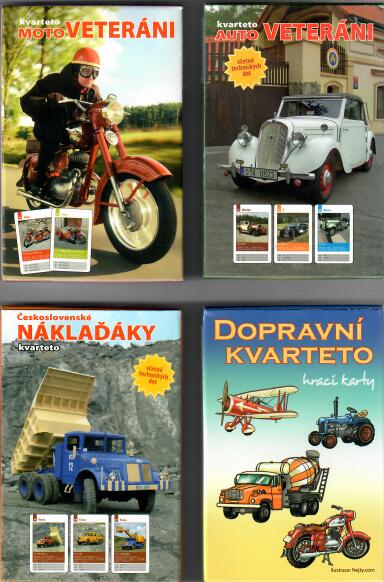
32 playing cards with pictures of vintage vehicles. The game includes instructions.
70,00 CZK
32 playing cards with pictures of vintage vehicles. The game includes instructions.
32 playing cards with pictures of vintage vehicles. The game includes instructions.


| Weight | 0,07 kg |
|---|---|
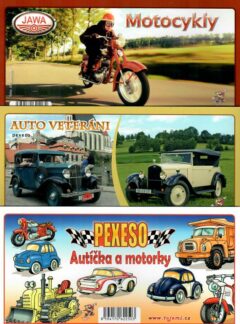
| Variant | Czechoslovak TRUCKS, Steam locomotives, Car veterans, Transport quartet, Motorcycle veterans |
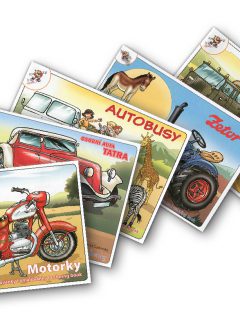
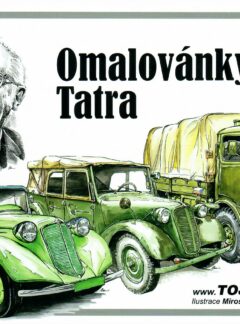
Coloring book containing 8 colorful images of historical vehicles.
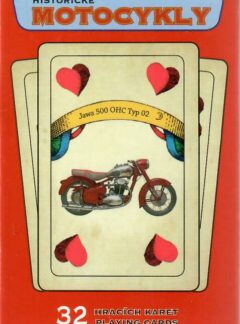
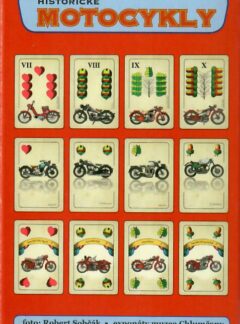
32 playing cards with photos of vintage motorcycles.
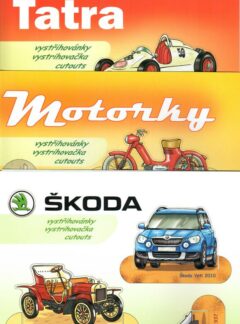
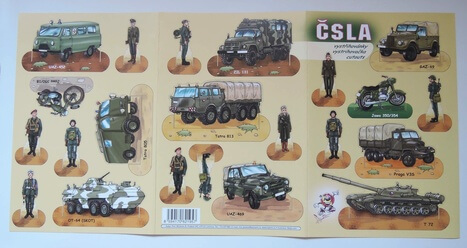
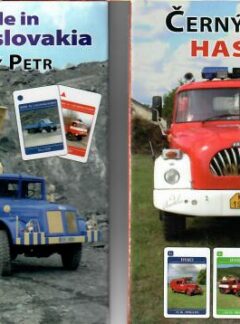
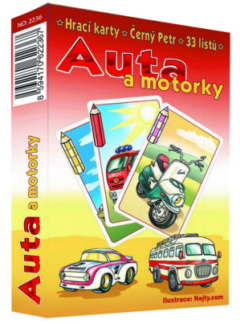
33 playing cards with painted pictures of vintage vehicles. Includes instructions for the game. The game is suitable for three or more players.
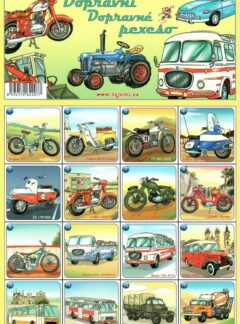
Memory game consisting of 32 pairs of photographs of historical means of transport.
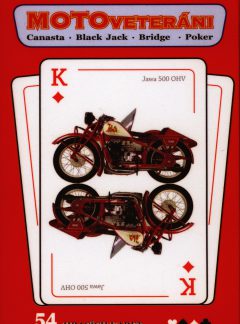
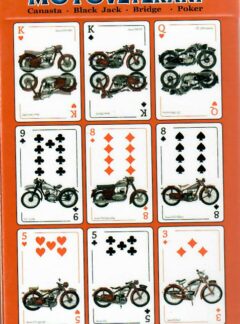
54 playing cards with photos of vintage motorcycles.
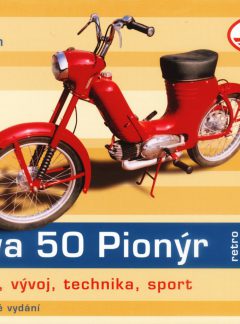
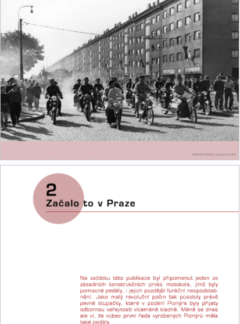
The second edition of this unique publication supplements and clarifies some previously published facts about the history and technical parameters of this small-displacement motorcycle. The history of the very latest machines from the World Championship is newly recalled and data on current activities on the racing field are added. This edition contains more than half of the new, previously unpublished photographs.
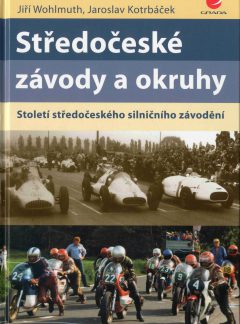
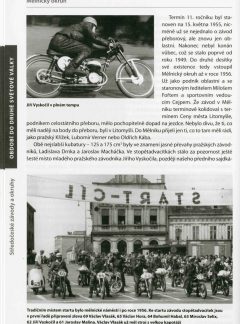
Acceptable distances between populated places, as well as a good road network in Central Bohemia, have made it possible to write an interesting history of racing in this region. Long-distance races, hill races and city circuits began to be held here more than 110 years ago. In many towns, racing had only a fleeting existence and after the first year, no more followed (Kralupy nad Vltavou, Vlašim, Horoměřice, Roztoky u Prahy). However, there were places where racing took place for several decades (Městec Králové – 40 years; Kolín – 16 years; Mělník – 13 years). For each of the thirty-nine places, the authors found the exact race routes, information from the organizing activities and result lists with the names of competitors, both known and unknown, and spiced everything up with interesting facts from the period press. Witnesses will reminisce over the pages, and representatives of the younger generations will wonder where and on what roads the racers fought for supremacy.
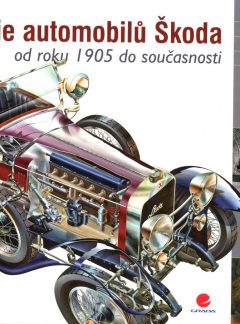
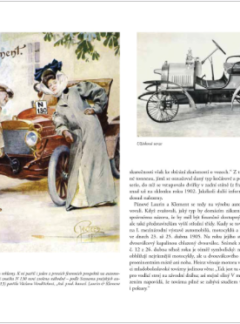
A selection of the most famous cars produced in Mladá Boleslav. The technical development of cars is evident in the individual types from the first Laurinka to the present. Each model is presented in a detailed technical transparency by Jiří Dufek, supplemented by other technical drawings or examples of drawing documentation. The profile of each of the cars on display is illustrated in detail by color and black-and-white photographs from the archives of the authors and the car manufacturer. A large amount of visual material is connected by interesting texts by Jan Králík about the development of individual models, their production and sporting successes, and it also introduces several personalities from the many who have contributed to the success or fame of Mladá Boleslav cars. The narrative color book will delight anyone who is at least a little interested in cars and will certainly appeal to die-hard fans of Škoda cars.
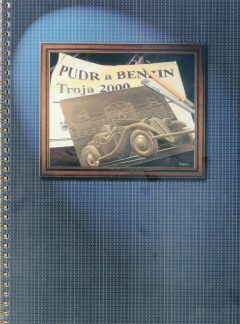
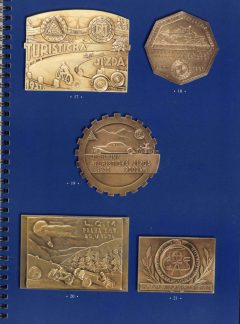
For the exhibition POWDER and BENZÍN Troja 2000, the author prepared a catalogue with images of more than 200 commemorative plaques, often created according to the designs of prominent design figures – Španiel, Nušl, Axmann, Švec, Pištora, Pichl and others. Two criteria were decisive for the selection – that the plaque was issued in Czechoslovakia in the period before the Second World War. Motoring plaques are nowadays a narrowly specialized collecting discipline. The publication will provide information and can direct thematic creation of private collections.
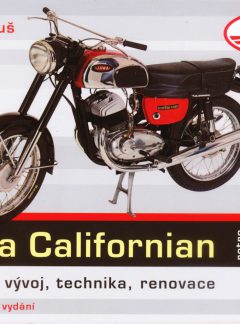
Jawa Californian – motorcycles that, with some exceptions, were intended only for foreign customers, leave hardly any one-track fan indifferent. The second edition of the successful publication will reveal what preceded their creation, how they developed and what influenced the sale of motorcycles from Czechoslovak manufacturers to the North American continent since 1945.
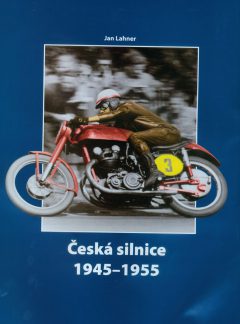
A lifelong passion for motorcycle racing, careful study of archives, collection of memories of eyewitnesses and period photographs, programs of long-forgotten races and newspaper clippings, translated into clearly arranged 270 large-format pages in hardcover. This is what Jan Lahner's magnum opus, Czechoslovak Roads 1945-1955, looks like. Renowned motoring historian Jan Lahner has compiled a unique work documenting motorcycle racing on our roads in the first post-war decade. Each year of this period is dedicated to one chapter, describing in detail individual motorcycle races. Each chapter is supplemented by biographies of the racers who met in those years on road races and formed the top of the time. The lives of racers such as Kostlivec, Bubeníček, Lucák, Dusil, Kněz, Jiří and Jaroslav Simandl, or Jiří Koštíř and many others have not yet been published anywhere. Similarly, many of the more than 600 black and white photographs contained in the book have not yet been known to the public. The last chapters contain technical descriptions of interesting racing motorcycles and a clearly arranged table of all recorded race results.
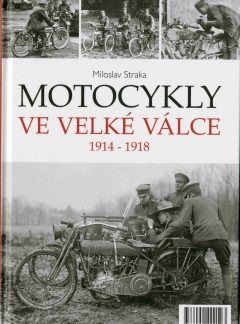
Another in a series of works by the renowned author deals with motorcycle history again, this time against the backdrop of World War I. It is published at a time when a hundred years have passed since its course, and the consequences of which fatally influenced the further development of all sectors in Europe. The book is not a historical study of the war, but has the ambition to present the role of motorcycles and the soldiers who served with them in the war. Motorcycles in the Great War performed a number of specific tasks. In addition to the very important courier service, they also served in ambulance and reconnaissance services. Armies used motorcycles on almost all battlefields, but the largest number was on the Western Front on the side of the Allies. The book introduces readers to individual variants of military machines, technical details, a detailed description of the most used models and the history of the brands represented. The publication brings a lot of interesting information not only to our regular fans of motorcycle history, but should also appeal to fans of military history and militaries in general.
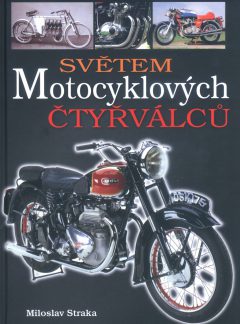
The author has compiled the history of the development and production of four-cylinder engines for motorcycles from the first preserved types. After a three-page introduction to the subject, there is the first of the structurally interesting motorcycles with a four-cylinder engine, where we also have a proud world first: the Laurin & Klement with an in-line four-cylinder engine made in Austria-Hungary. From a chronological perspective, various design directions are interesting, often avant-garde, but also some less fortunate ones, which were often limited by the possibilities of workshop processing. The theoretical idea of the designer was timeless, but the appropriate technology had not yet been produced. Detailed technical descriptions of another twenty-five structurally interesting motorcycles of often no longer existing production brands will certainly interest readers of all age groups.